Dining Room Chandeliers with Shades: Our Brass Fixture
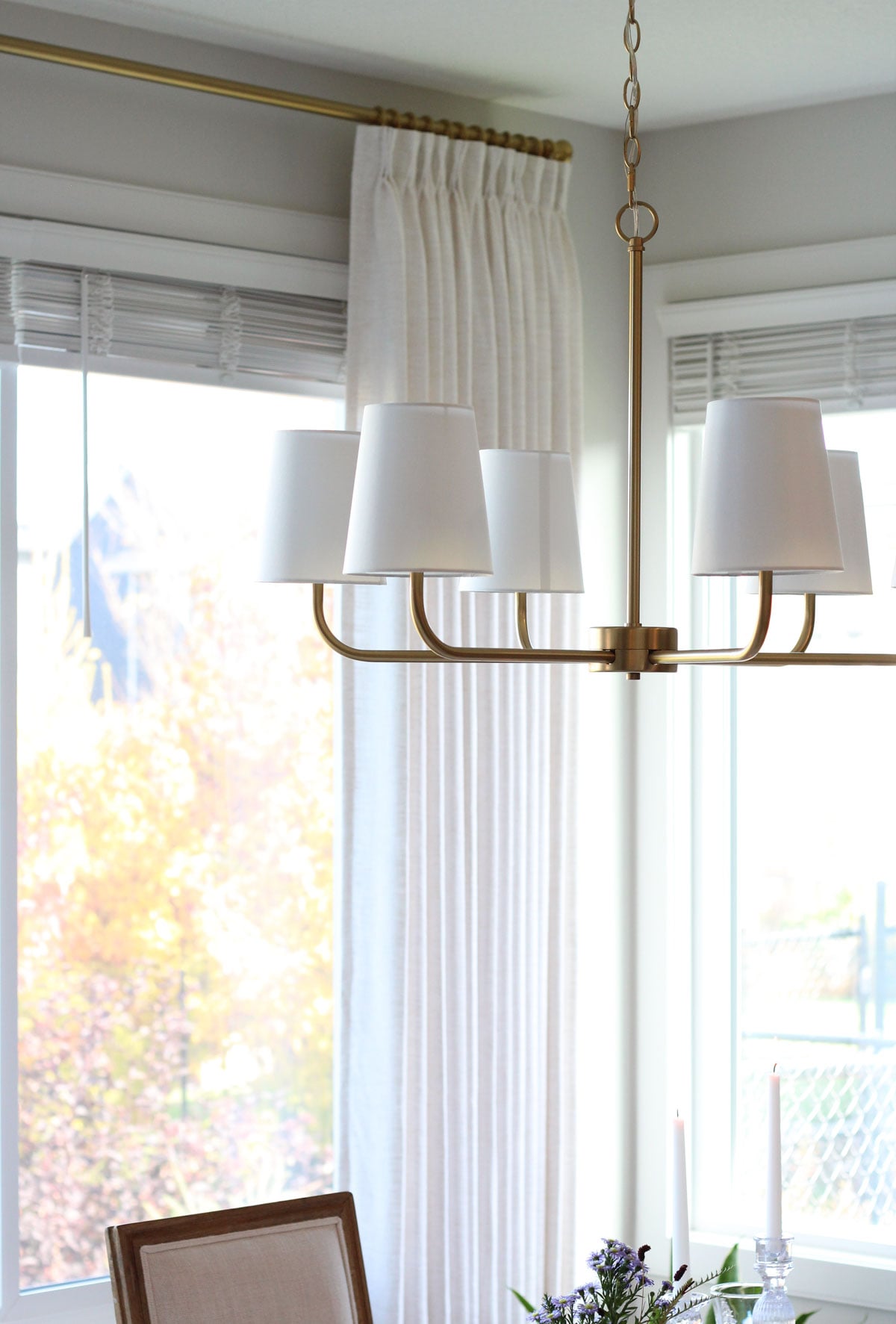
Choosing the right dining room chandelier involves more than just finding a style you love. From the finish and size to the quality of light and keeping sightlines open, a few details can make a big difference. Take a closer look at our aged brass chandelier with white fabric shades, some basic guidelines to keep in mind when choosing a fixture, and other chandelier options to consider for your own home.
Some links used in this post are affiliates. Please refer to my disclosure policy for more information.
In my recent post, I shared a few updates to our dining room, including the linen drapery and some of the details that are helping the space come together. Today, I’m taking a closer look at the chandelier we chose, along with a few other options if you’re looking for dining room lighting ideas.
Lighting can be tricky to get right, and I spent quite a bit of time weighing different styles and finishes before settling on ours. I thought it might be helpful to walk through that process, along with a few things to keep in mind when choosing a chandelier for your own home.
Our Brass Dining Room Chandelier
In my search for a dining room chandelier, I kept coming back to the Brody chandelier by Capital Lighting. I had the chance to see it in person before ordering, and I really liked its aged brass finish. It also felt sturdy and well made, which gave me confidence in the quality.
The white fabric shades and classic design felt like a good fit for this home, which leans a little more traditional. I also liked that it offered a nice balance of style and value compared to some of the other fixtures I looked at. Some can be quite pricey!
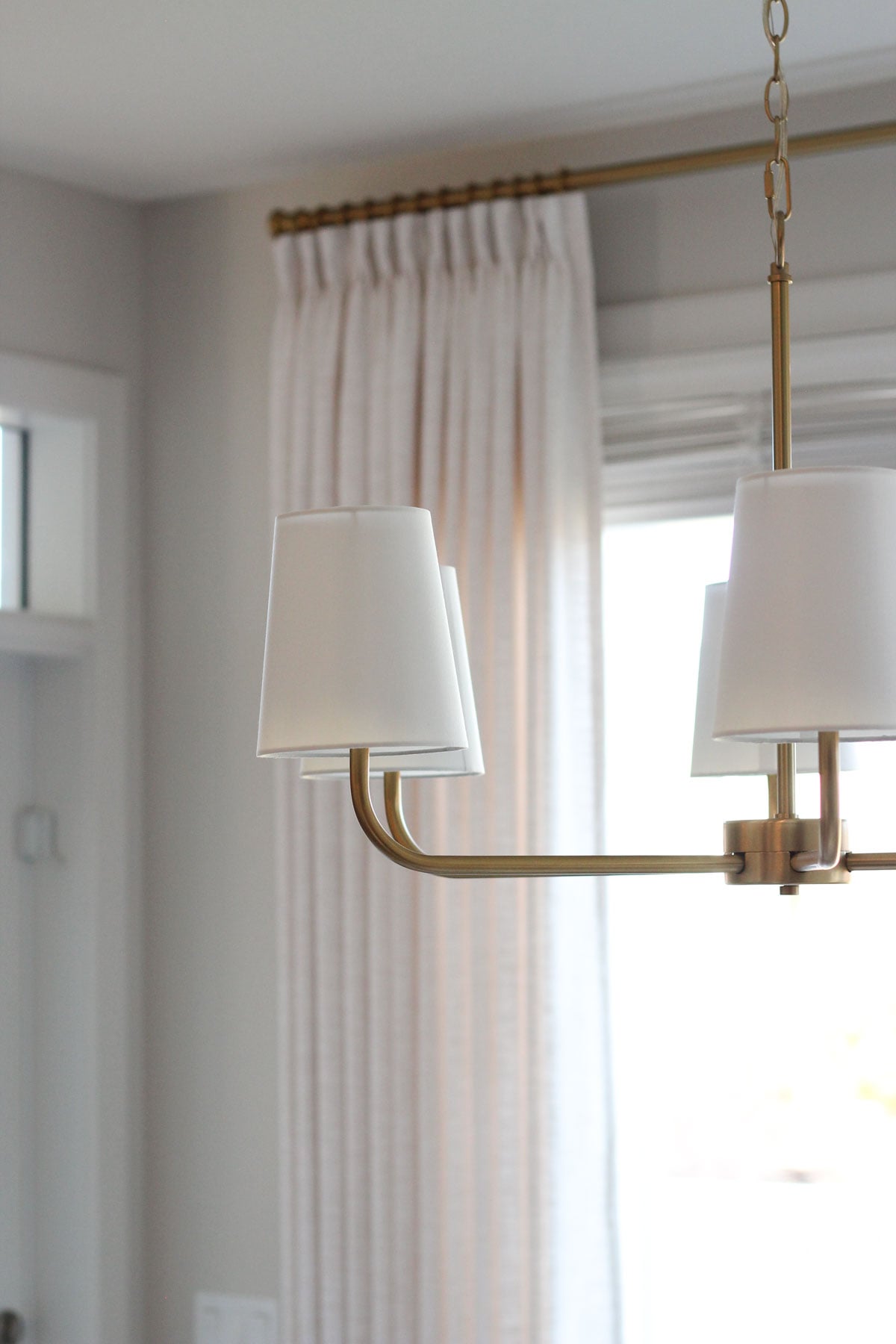
The finish works well with the other brass details in our dining room, including the curtain rod. It has a softer sheen that adds warmth without looking too yellow, pink or orange.
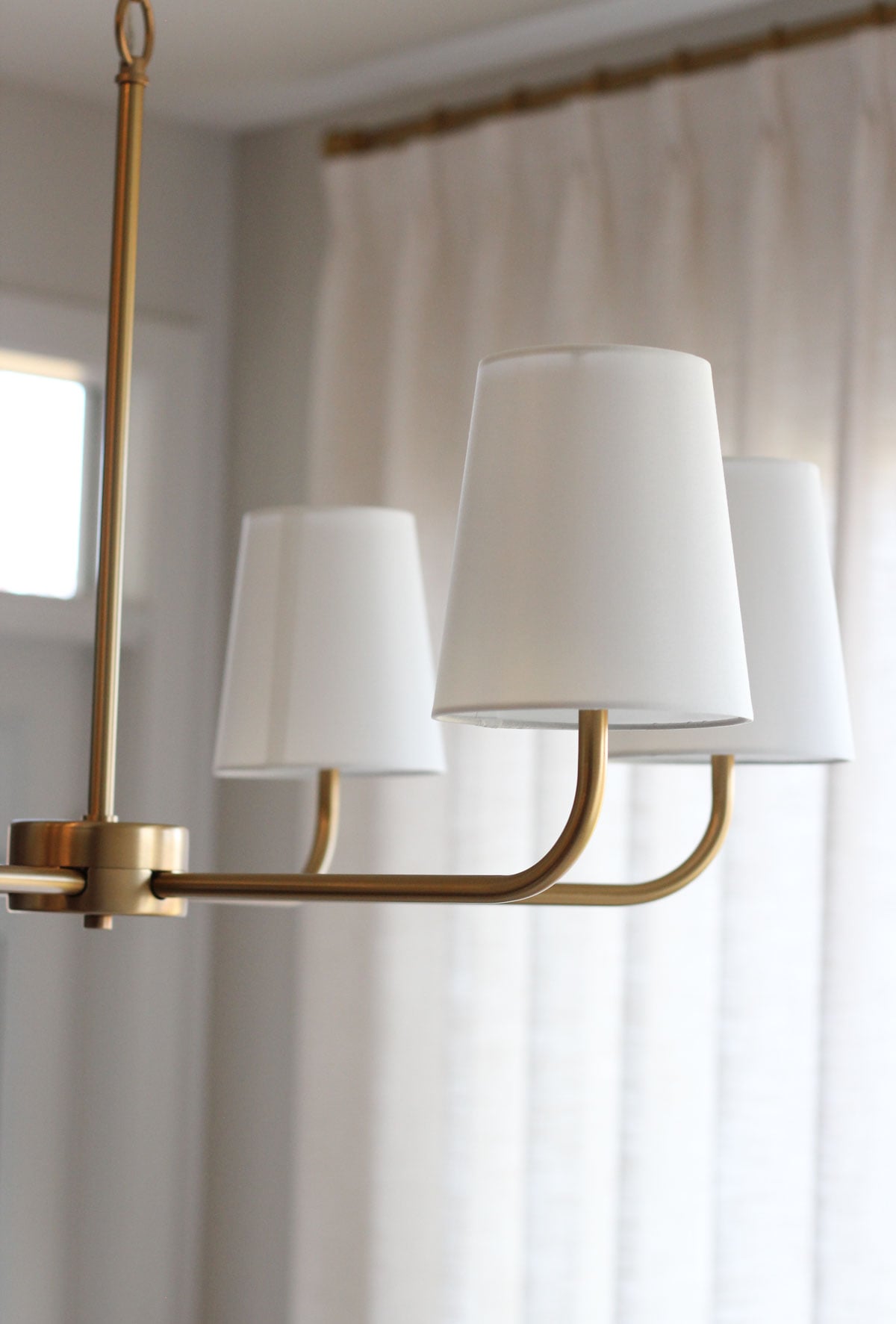
The scale feels right above our dining table without overwhelming the space. I also appreciate how the design keeps the view through our dining room windows clear from the kitchen, which was important to us.
Installation was pretty straightforward, as long as we stuck to the instructions provided (my husband did try to veer off course. Don’t they all?!). If you’re replacing a light fixture, be sure to turn off the power at the breaker first. And if you’re unsure about any part of the installation, it’s best to hire a qualified electrician.
Having the chandelier on a dimmer is another plus, giving us more flexibility to adjust the light for different occasions. Keep reading for a few tips on lighting and brightness to help you choose the right fixture for your own dining room!
What to Consider When Choosing a Dining Room Chandelier
Size and Hanging Height
Before selecting a light fixture, it’s important to look at the size of your dining table and the proportions of the room. A chandelier should feel balanced with the table rather than too small or overpowering.
We went a little larger with our fixture because the open-arm style and spacing between the shades keep it from feeling too bulky.
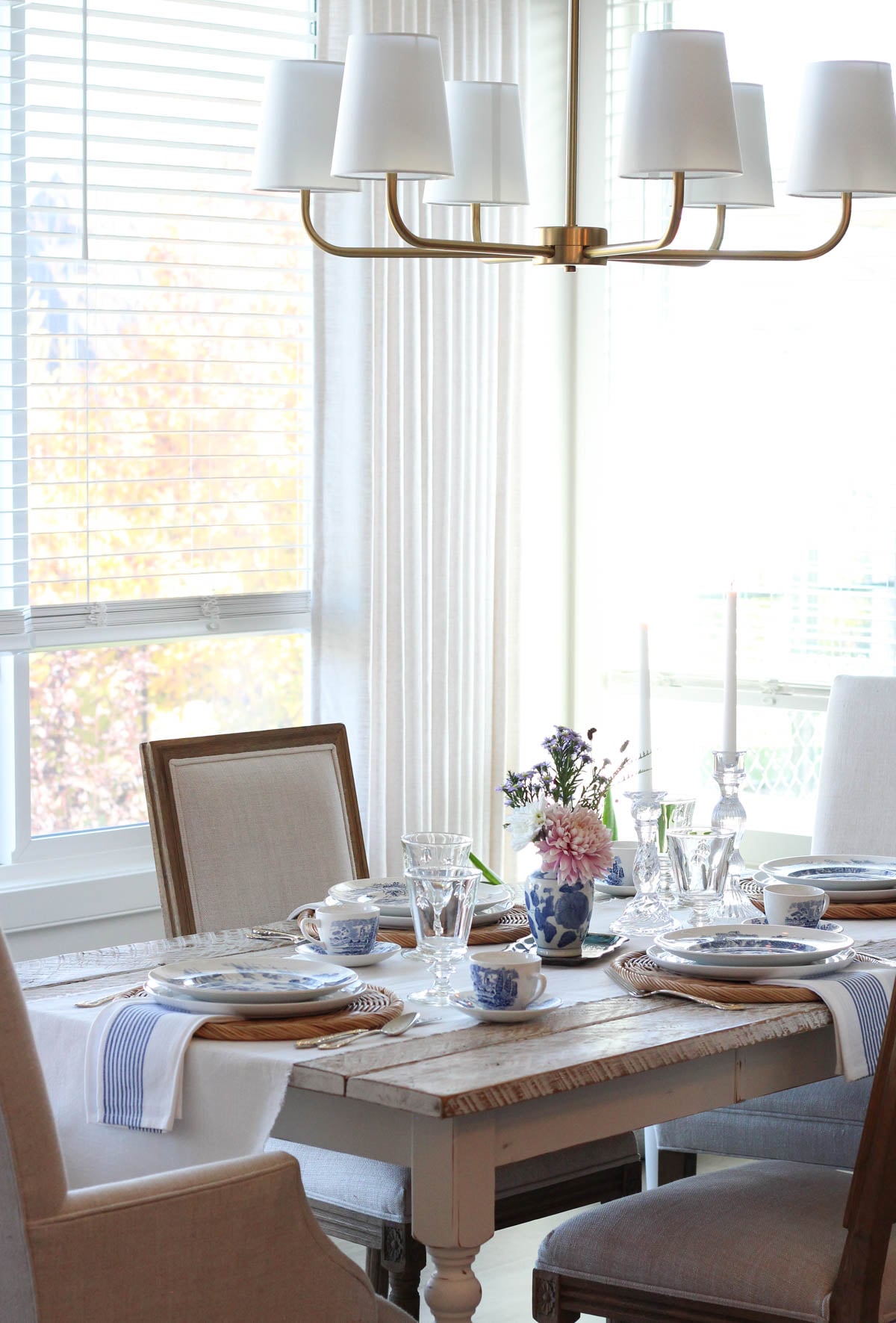
As a rule of thumb, a chandelier should be around half to two-thirds the width of the dining table, with roughly 6 inches of clearance on each side. An airy design may allow you to go a little larger because it feels less visually heavy. Consider the overall proportions of the room and the space around the fixture rather than relying on measurements alone.
Hanging height matters too. As a starting point, aim for about 30 to 36 inches between the bottom of the chandelier and the tabletop, adjusting for your ceiling height and the size of the fixture. You want it low enough to feel connected to the table, but high enough that it doesn’t interfere with conversation or block the view across the room. If you have an open sightline through nearby windows, that’s worth considering as well. We chose to hang ours higher for that reason.
Finish
Your chandelier doesn’t have to match every finish in the room. In fact, mixing metals and finishes can make a space feel more collected and interesting. Repeating a finish at least once, however, helps create a sense of connection without everything looking too coordinated.
Aged brass is one option I like for bringing warmth to a neutral space. Similar brass finishes are also called satin brass, champagne gold, tumbled brass, antique brass, vintage brass or European brass. These lean into muted, earthy undertones rather than bright, reflective metallic ones.
Style and Overall Feel
The style of the fixture matters just as much as the finish. Before deciding, think about the overall feel you want to create.
- What style am I drawn to? Do you prefer a classic, understated look, something more traditional, or a fixture with a more modern or unexpected shape?
- What kind of atmosphere do I want to create? Think about whether you want your dining room to feel light and airy, warm and inviting, or a little darker and moodier. The shape, finish and overall look of a chandelier can help set the tone for the space.
- How will it work with the rest of the room? Consider how the chandelier will look with your furnishings and any other light fixtures visible from the dining room. If your room has a lot of hard surfaces, such as wood, stone or metal, a fixture with fabric shades can introduce softness, while rattan or another natural material can add texture. Aim for a mix of finishes and materials that feels cohesive.
- How will it look throughout the day? Natural daylight and evening lighting can change the appearance of a fixture. The finish, shades and overall shape may feel quite different when the lights are switched on, so think about how it will suit your space in both settings.
- Will I still love it years from now? Trends come and go, so consider whether the style is something you’ll enjoy living with over time.
Shades and Light Quality
Fabric shades are worth considering if you prefer a softer look than exposed bulbs. They diffuse the light and help reduce the harshness of bare bulbs. After living with both, we prefer the softer glow they create over the dining table.
The light bulbs you choose also make a difference in how your dining room looks and feels. I’d look for LED bulbs in the 2700K to 3000K range, with a CRI (Colour Rendering Index) of 80 or higher to help colours look more true to life.
A 2700K bulb gives off a more golden, yellow light, while 3000K provides a cleaner, whiter light that still feels warm and inviting. Both can work well, depending on the colours and finishes in your room.
After trying several options, we settled on 3000K LED bulbs from a local lighting store because they made our drapery, dining table and linen chair upholstery look the most natural. The 2700K versions cast too much of a yellow tone over those finishes. We also found that 40W equivalent bulbs provided plenty of light with all six lights in our chandelier, while 60W equivalents were too bright.
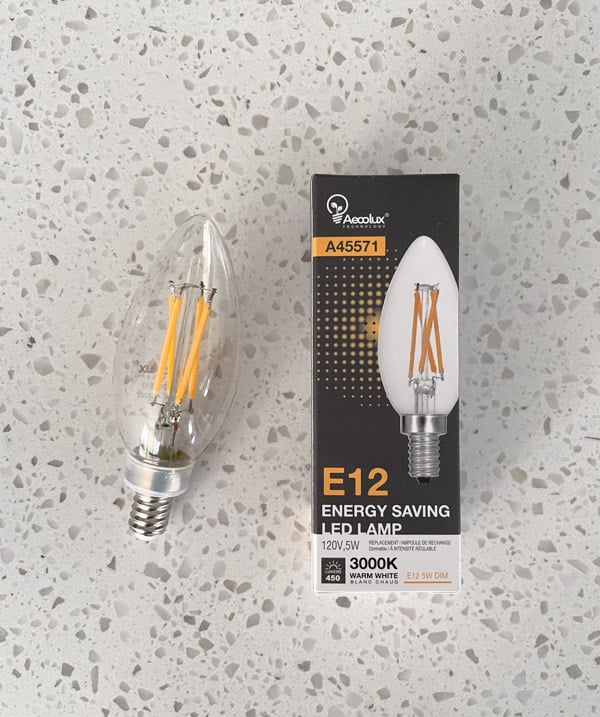
It’s worth testing a few options in your own space, since wall colours, fabrics and wood tones can all influence how the light looks. Find your perfect blend!
Shop Bulbs: I’ve linked candelabra LED bulbs below if you’re looking for options with a similar colour temperature and light quality.

I’d also recommend pairing your dimmable bulbs with a compatible dimmer switch. It gives you the flexibility to turn up the light for setting the table or tidying up, then lower it for a more relaxed atmosphere when dining or entertaining.
Lighting Tip: Don’t choose a chandelier based on looks alone. We loved the beaded chandelier in a previous home, but it didn’t provide enough light, so we often had to rely on lamps. Consider how much illumination your dining room needs and whether you’ll have other light sources to supplement the fixture.
More Dining Room Chandeliers with Shades
If you’re considering a similar look, I’ve rounded up several other brass chandeliers with fabric shades. There are different shapes, sizes and price points to consider, depending on the style of your dining room.
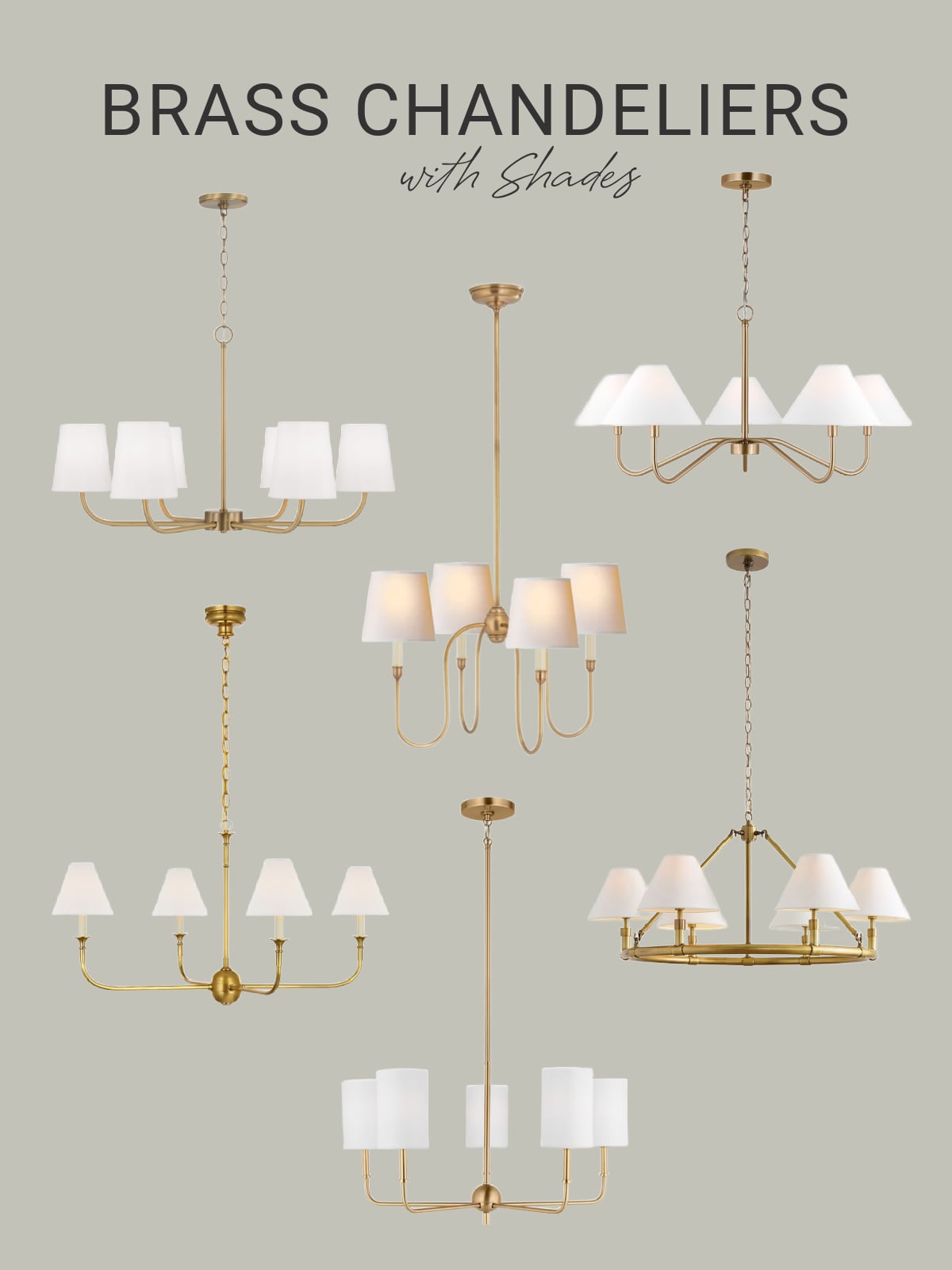
- Brody Medium Chandelier in Aged Brass by Capital Lighting (also at Wayfair US and Target) – the fixture we selected!
- Vendome Small Chandelier in Antique Brass (also at Visual Comfort)
- Eldon Large Chandelier in Satin Brass (also at Visual Comfort)
- Piaf Large Chandelier in Antique Brass
- Foxdale Five Light Chandelier in Satin Brass
- Chambers Rounded Shaded Chandelier in Vintage Brass
Before choosing a fixture, double check the dimensions, finish and bulb requirements, and consider how its proportions will work over your table.
Where Else to Use This Style of Chandelier
An open-arm chandelier can work in more places than just the dining room, particularly in spaces with enough ceiling height to accommodate it. Depending on the size and style, it can be a lovely choice for a living room, bedroom or entryway, adding interest without feeling too visually heavy. You could also consider one in a breakfast nook, provided the proportions suit the space. The open design gives it presence while keeping the overall look airy.
Other Brass Lighting Ideas for Your Home
Brass lighting is a finish I’ve used in several areas of our homes. Here are a few more examples that might inspire you.
More from Our Dining Room
If you’d like to see how the chandelier works with the rest of the space, take a look at Dining Room Updates & Layered Table Styling, where I share more of our dining room, including new linen drapery details and table setting tips.
Would you choose an open-arm chandelier for your dining room?
Sending you light,